What Is the Difference Between Needle Holder and Hemostatic Forceps?
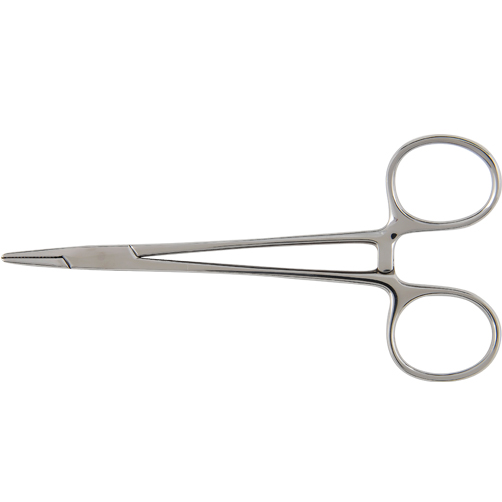
Needle holders and hemostatic forceps are two important surgical instruments widely used in medical procedures. Although these tools may appear similar in design, they serve completely different purposes during surgery. Understanding the difference between needle holders and hemostatic forceps is essential for healthcare professionals to ensure precision, safety, and efficiency during operations.
Both instruments are manufactured from high-quality stainless steel and commonly feature finger ring handles with locking ratchet mechanisms. However, their jaw structure, gripping function, and surgical applications differ significantly.
What Is a Needle Holder?
Needle Holder is a specialized surgical instrument designed to hold and guide surgical needles during suturing procedures. These instruments provide surgeons with a firm grip on needles, allowing precise stitching and wound closure during surgery.
Needle holders usually feature short, strong jaws with cross-serrated or textured inserts that securely grip surgical needles without slipping. They are commonly used in general surgery, dental procedures, orthopedic surgery, and microsurgical operations.
What Are Hemostatic Forceps?
Hemostatic Forceps are surgical instruments primarily used to clamp blood vessels and control bleeding during medical procedures. These forceps are available in different types, including mosquito forceps, Kelly forceps, and Crile forceps.
Their serrated jaws and locking mechanism allow healthcare professionals to securely hold blood vessels or tissues during surgery. Hemostatic forceps are essential tools for achieving hemostasis and maintaining a clear surgical field.
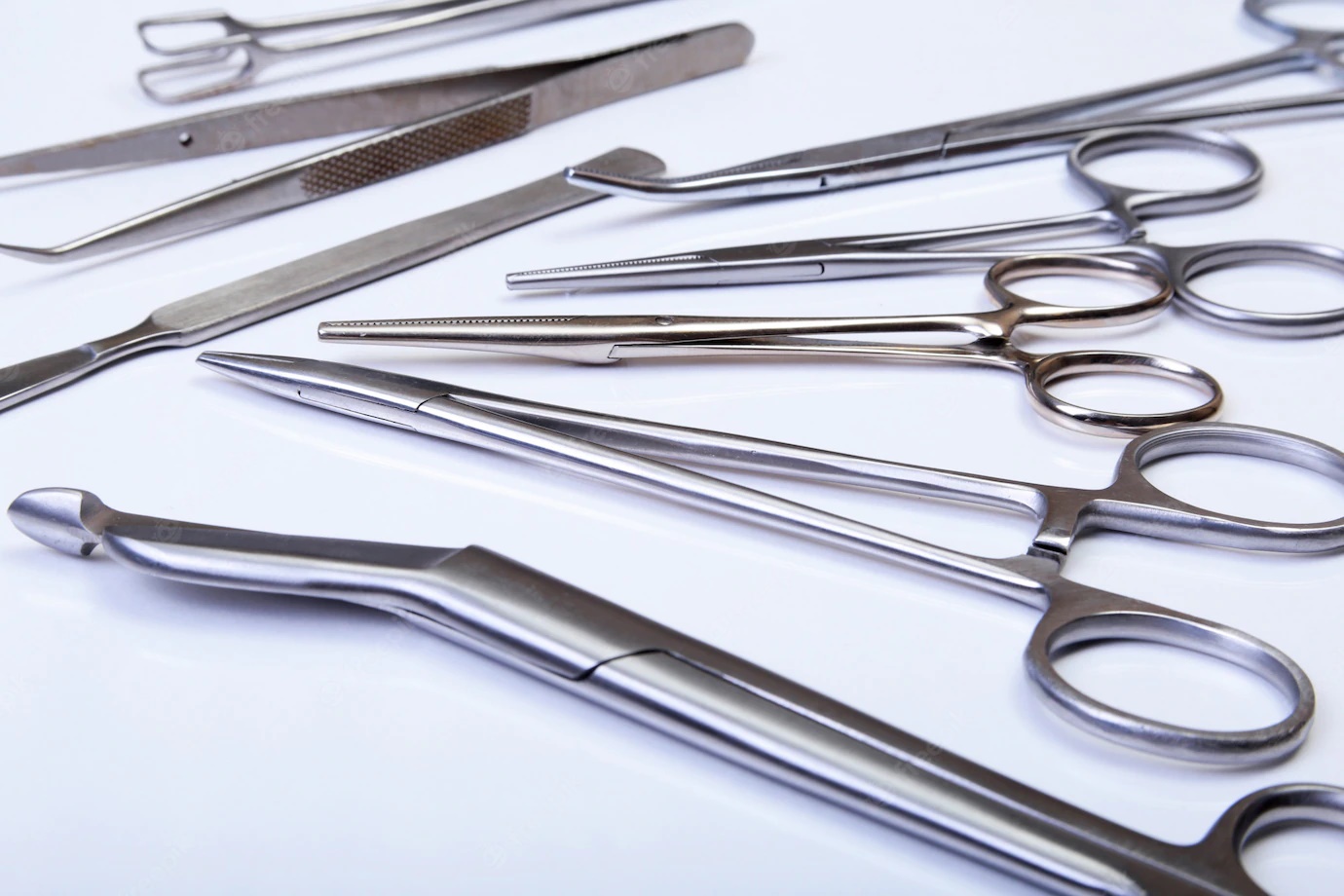
Main Differences Between Needle Holder and Hemostatic Forceps
Although both instruments look similar, several important differences separate needle holders from hemostatic forceps.
Primary Function:
Needle holders are designed for holding surgical needles during suturing, while hemostatic forceps are used to clamp blood vessels and control bleeding.
Jaw Design:
Needle holders have short, strong jaws with textured gripping surfaces for needle stability. Hemostatic forceps feature serrated jaws designed for clamping tissues and vessels.
Grip Strength:
Needle holders provide stronger gripping pressure to prevent needle movement during stitching. Hemostatic forceps are optimized for secure vessel clamping rather than needle control.
Surgical Application:
Needle holders are mainly used during suturing and wound closure, while hemostatic forceps are used for bleeding control and tissue handling.
Common Uses of Needle Holders
Needle holders are commonly used in:
- Suturing procedures
- Wound closure
- General surgery
- Dental procedures
- Microsurgery
- Veterinary surgery
Common Uses of Hemostatic Forceps
Hemostatic forceps are widely used in:
- Clamping blood vessels
- Controlling bleeding
- Tissue handling
- General surgery
- Emergency medical treatment
- Minor surgical procedures
Features of High-Quality Surgical Instruments
Premium surgical instruments are designed with features that improve precision, durability, and surgical performance:
- Corrosion-resistant stainless steel
- Ratchet locking mechanism
- Ergonomic finger ring handles
- Precision-engineered jaws
- Smooth finish for sterilization
These features ensure reliable performance, long-term durability, and improved handling during medical procedures.
Importance of Choosing the Correct Instrument
Selecting the proper surgical instrument is critical for successful procedures and patient safety. Using a needle holder instead of hemostatic forceps, or vice versa, may reduce surgical precision and increase the risk of tissue damage or procedural complications.
Healthcare professionals carefully choose instruments based on the surgical task, tissue type, and procedural requirements to achieve the best possible outcomes.
Conclusion
Needle holders and hemostatic forceps are both essential surgical instruments, but they serve different functions in medical procedures. Needle holders are designed for holding surgical needles during suturing, while hemostatic forceps are used to clamp blood vessels and control bleeding.
For high-quality needle holders, hemostatic forceps, and other professional surgical instruments, explore our complete collection of precision medical tools designed for reliable surgical performance.